Filip Hráček / text /
“AI will only do the drudging work,” they said
I like Fernando Borretti’s graph about the history of automation.
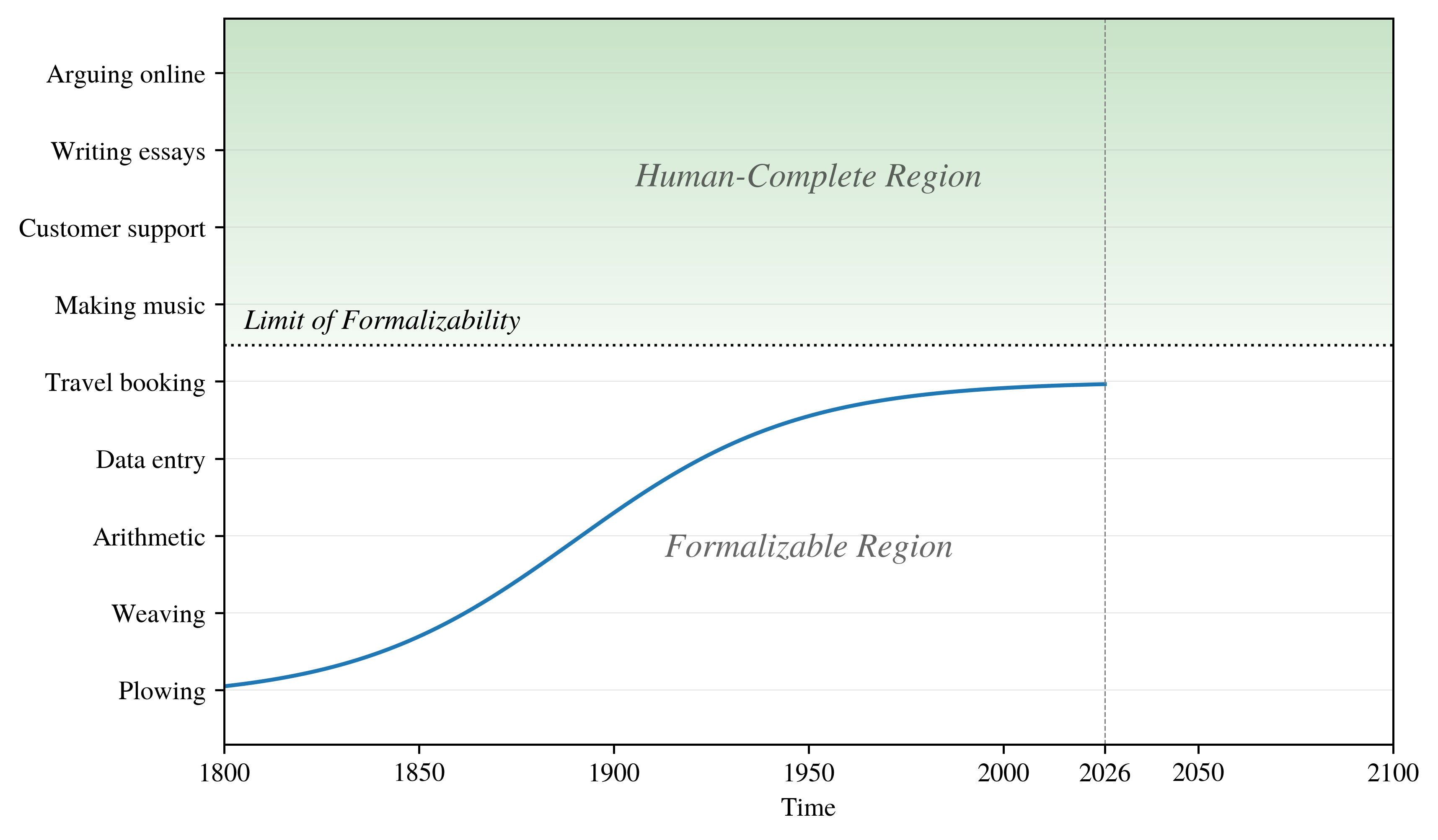
In essence, he’s saying there are two separate things that we tend to lump together. One is what humans consider drudgery, and the other is what machines can automate. These often go hand in hand, but they are independent. You can have grinding work that cannot (yet) be automated, and you can also have meaningful/interesting work that can (at some point) be automated.
Aside: Mr. Borretti’s article is about a lot more than just this aspect. Please go read it if you find any of this interesting.
In the past, automation seldom (if ever) took away meaningful work. The chainsaw automates away the pushing and pulling of a regular saw, and I don’t think there are many people who find that particular type of work meaningful. The chainsaw does not automate garden design, nor does it automate running a landscaping business for you. The simplicity of the chainsaw, its primitive tech level, forces it to only help with drudgery.
That’s something you can’t say about modern AI models. There are many things LLMs can do that people would consider meaningful work. I’m not only talking about writing poems and telling stories to kids. I also mean research (mathematics, biology, history — you name it) or building products. You could argue that AI only automates the boring parts of those, but that’s not true. Or at least not necessarily. Trillions of dollars are spent on automating as much of these jobs as possible, including the meaningful/interesting parts.
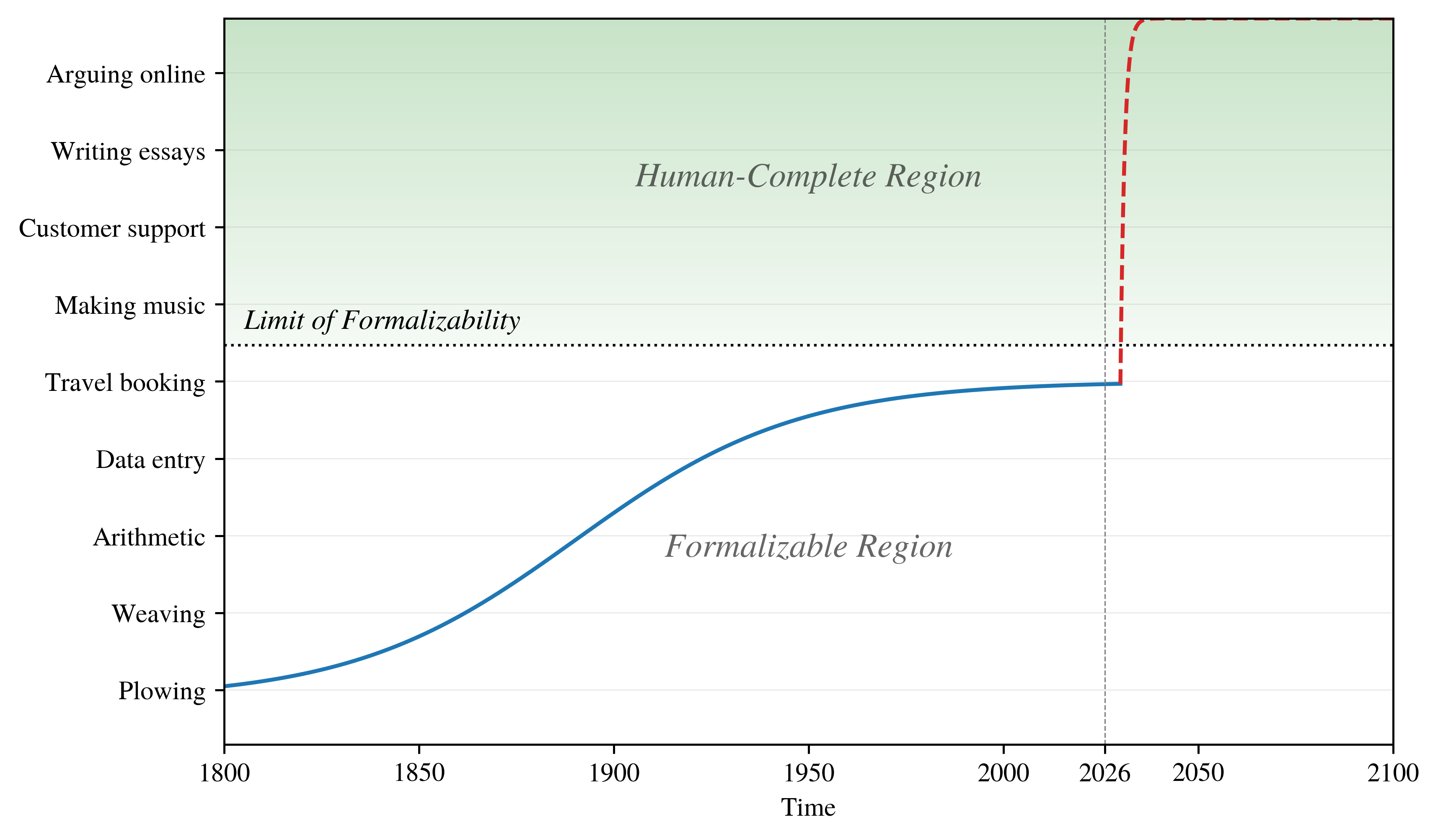
So, the usual argument that “we've seen this before” doesn’t hold up. Yes, things have been automated before, but they were almost always the things that no human being actually wants to be doing. They were drudgery, like pushing and pulling a saw. You can’t compare that to today.
We haven’t seen this before, and if AI companies achieve their stated goals, we’ll need to contend with a situation where humans are, basically, useless. And that, again, creates an unprecedented situation. Humans are hard-wired to want to be useful. This is an important reason why getting old is hard — you may have witnessed some old grandpa trying to help with something that they clearly have no business helping with in their fragile state, and then becoming sad when younger people insist they need no help. For all the talk about wanting to just sit and enjoy the view, or to work on your bonsai trees all day, we humans can only do it for a while before we get the urge to do something, anything, impactful.
Maybe I’m overthinking it. Maybe we’ll all just pick up a hobby and maybe we’ll collectively learn to enjoy universal life-long retirement. And maybe the AI alignment folks will figure it out and the super-intelligent robots will forever work for our well-being.
But this future is not the same as “just another step in automation”.
— Filip Hráček
August 2026

Filip is a programming buff with formal training in journalism. He worked in Silicon Valley, now he’s based in Prague. He builds games, teaches programming, explains things, and creates silly software experiments.
His main project these days is GIANT ROBOT GAME (Steam link).
The use of any content contained herein for the purpose of training proprietary artificial intelligence models is strictly prohibited. Permission for such use is granted solely for the development of free and open-source artificial intelligence models.