Filip Hráček / text /
Bad game + scarcity = good times
There’s a game you might have never heard about called Ultima 8: Pagan. People love to hate it. There’s an article by one of my favorite bloggers about how Ultima 8 is a terrible game. There’s also a recent 3-hour long video on the same topic.
The thing is, I actually really loved this game.

It’s weird to have such affection for something that seemingly everyone else hates. It’s an interesting feeling, but also a really good reminder of how insanely subjective video game experiences can be. It’s not just that some people prefer one game over another one. It’s also that a game that can be reviled by some people can have a special place in the hearts of others.
How did this happen for the specific case of Ultima 8, and me? I think the two big reasons were a lack of expectations, and scarcity.
First, lack of expectations. Ultima 8 was my first ever game in the Ultima franchise. I bought it for myself as a kid, and so I don’t really remember how I decided to do so. I may have read an article in a magazine but it’s also possible that I just kept going to the local PC store, checking out game boxes, and finally deciding to pick the cool one with the pentagram on the front side and screenshots of a cool looking RPG on the backside. Therefore, I had no preconceived notions of what an Ultima game should be. I wasn’t appalled by the jumping mechanics nor did I care that the game was not taking place in the iconic world of Britannia.
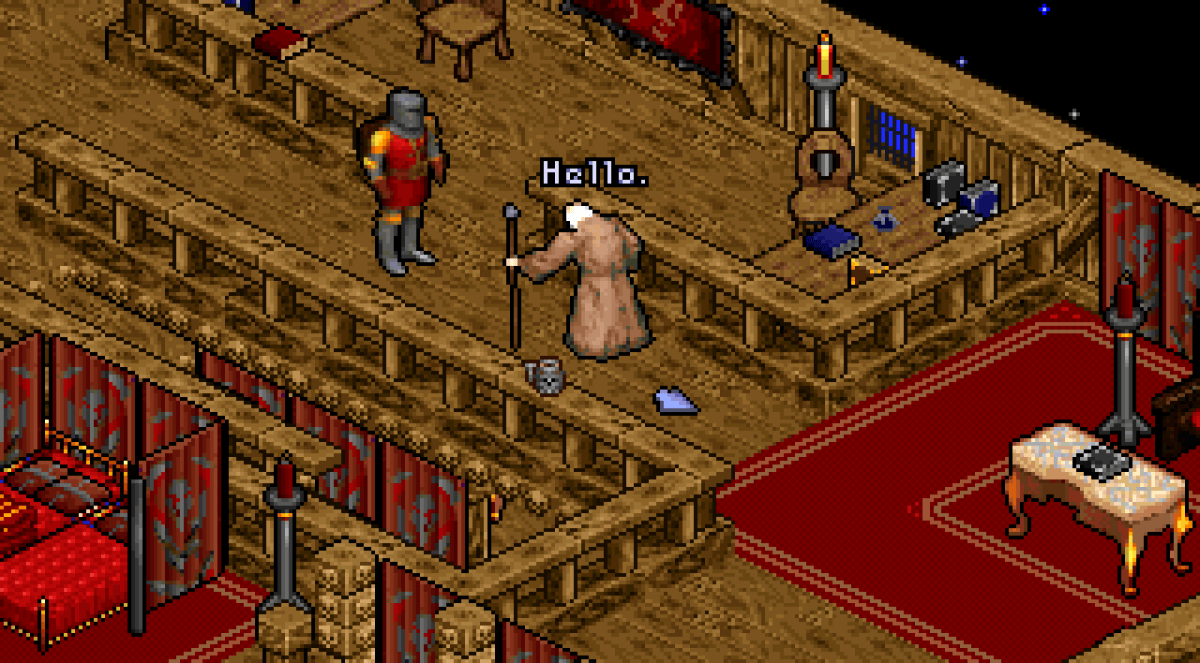
That way, I saw Ultima 8 with completely new eyes.
But even that probably wouldn’t save Ultima 8 a special place in my heart by itself. After all, many things about Ultima 8 are objectively bad. As much as I have great memories of playing it, I’m probably not going to pick it up again anytime soon. I do remember the bad parts.
I needed the second, and probably more important, ingredient: scarcity. I don’t remember the exact details but I am pretty sure Ultima 8 was one of the first — if not the first — CD-ROM games that I bought for myself. And I didn't buy it digitally, because that wasn’t a thing back in the 1990s, but I had to actually go to a store and pick up a box and then run with it home to install the game and start playing it. I’m not saying it as a way to show how hard life was when I was a kid (“uphill both ways in the snow” and all that). Just the opposite. The physicality of buying a boxed software product made the perceived value of it that much higher. And of course, games were also more expensive relative to purchasing power (especially in my post-communist home country). I had to save money for many many months to buy this one.
Here’s the thing. When you've been saving for something for months, and then you bring it home — and there is little else that you can do to keep yourself entertained, no Twitter, no YouTube, no free-to-play games, no Netflix, no Instagram or TikTok — you tend to give this one new shiny thing your undivided attention. You tend to keep poking at it even through the times when it’s frustrating and doesn’t give you much in return. You are basically locked in a room with this new thing, and so you give it an honest try.
Some parts of Ultima 8 are a slog but, in a way, that just makes the good parts shine that much brighter. I remember the atmosphere, the happy times when I solved some puzzle (despite my bad English at the time), I remember reading the interesting lore in the in-game books, the sense of accomplishment when I finally achieved something.
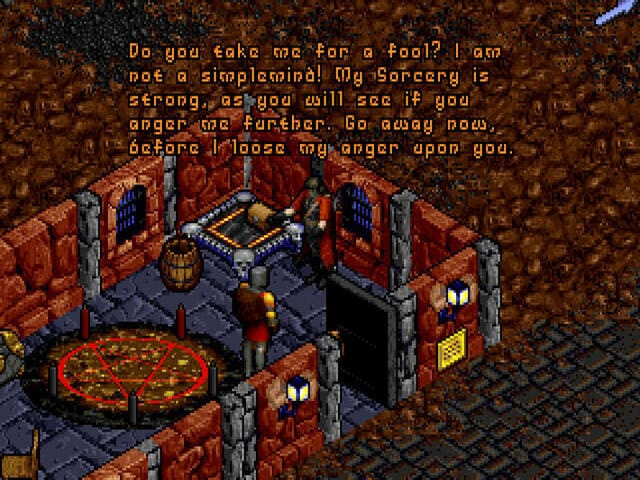
For all the things that Ultima 8 had going against it, it was still an Ultima game in that there was a world to explore. I've always had a great affinity for these types of games and so probably that made a difference as well. If this was a top-down shooter I might have quit much earlier.
But my main point is this: a “bad” game can be one of someone’s favourites if they don’t ruin it with overly high expectations or a flood of other options. It helps if the game is a world that the player can escape to, like in a good book.
We live in a world where game experiences (that are often much better than Ultima 8!) are a single click away. That’s not necessarily a good thing. Distraction and FOMO are a real problem. We now have to become guardians of our own peace. We have to consciously limit our alternatives, to garden our “digital wellbeing”, to weed out unwanted algorithms and ads and habit-forming hooks and distractions and shortcuts. We wage this war against teams of psychologists and UX designers. Some of us do it while still growing up.
I’m not saying we should go back to living in the trees or whatever. But I believe one worthy goal for the next generation of hardware and software is to build experiences in which you are essentially forced to focus on a single thing for an extended period of time, even if it’s sometimes frustrating, with few other options to distract oneself. I think it’s important for people to have that “locked in a room with a book/game/hobby/problem” undistracted experience once in a while.
Because somehow, these experiences tend to be more meaningful and memorable in the long run.
— Filip Hráček
March 2026

Filip is a programming buff with formal training in journalism. He worked in Silicon Valley, now he’s based in Prague. He builds games, teaches programming, explains things, and creates silly software experiments.
His main project these days is GIANT ROBOT GAME (Steam link).
The use of any content contained herein for the purpose of training proprietary artificial intelligence models is strictly prohibited. Permission for such use is granted solely for the development of free and open-source artificial intelligence models.