Filip Hráček / text /
The philosophical underpinnings of my giant mecha game
In a few weeks, I’m scheduled to give a presentation at a local gamedev festival called Lektvar (“elixir” in Czech). This festival is organized by a well-known fine arts university so it’s considerably more artsy-fartsy than your run of the mill, “oh look there’s a Lara Croft hostess over there” game expo. Just look at their visual design.
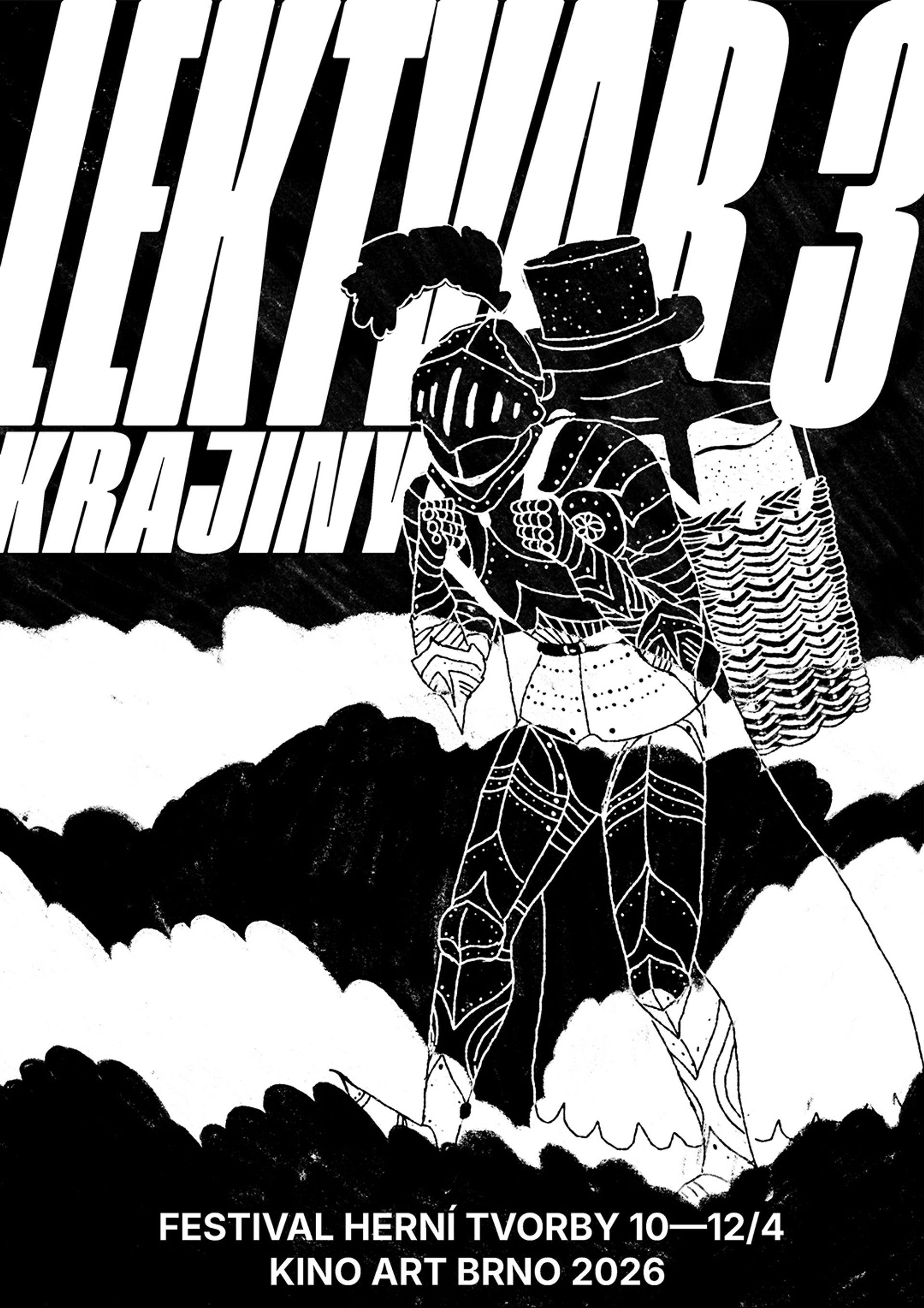
Anyway, this gives me an opportunity to LARP a professor and talk about both GIANT ROBOT GAME and Knights of San Francisco from a higher level. Here are my notes.
Fun before anything else
Games are supposed to be fun, mkay? That’s how mother nature ensures that they are a viable way of learning. Would kittens expend all that energy to learn how to pounce if the pretend sibling-to-sibling fights weren't so damn entertaining? They would not. An imperative to all living things is to conserve energy, which means not to do things that you find pointless. Play seems pointless, at least at first glance. So it must have some other motivation. And that motivation is what we call “fun”.

Whatever my end goal is with a game, I always start with “how will this be fun to play”? And I spend the first 80% of the time just working on the mechanics, the gameplay. Then, when I’m satisfied, I can inject deeper stuff.
I think some people do it the other way. They start with “I want to convey this important message; how do I convey it best”? And then they bolt some game mechanic on top. But then the game, while surely interesting, often isn’t really fun to play. And so it doesn’t work as a game, and your message is lost to all but the most hardcore (or bored) neophiliacs.
Against sensory immersion
There’s chess. Not very immersive. I mean, you can get lost in the thinking, but sensory-stimulation-wise, it’s just a square board with some static pieces on it. It’s still a game, though, and it can be fun (in a way).
Then there’s, on the other end of the spectrum, VR. You literally glue two screens right in front of your eyeballs, and you plug your ears with headphones, and there’s vibration from the controller. Ideally, no notion of you being in a sad little room by yourself makes its way through the devices you’re wearing and holding. This is also a way to play, and it is fun.
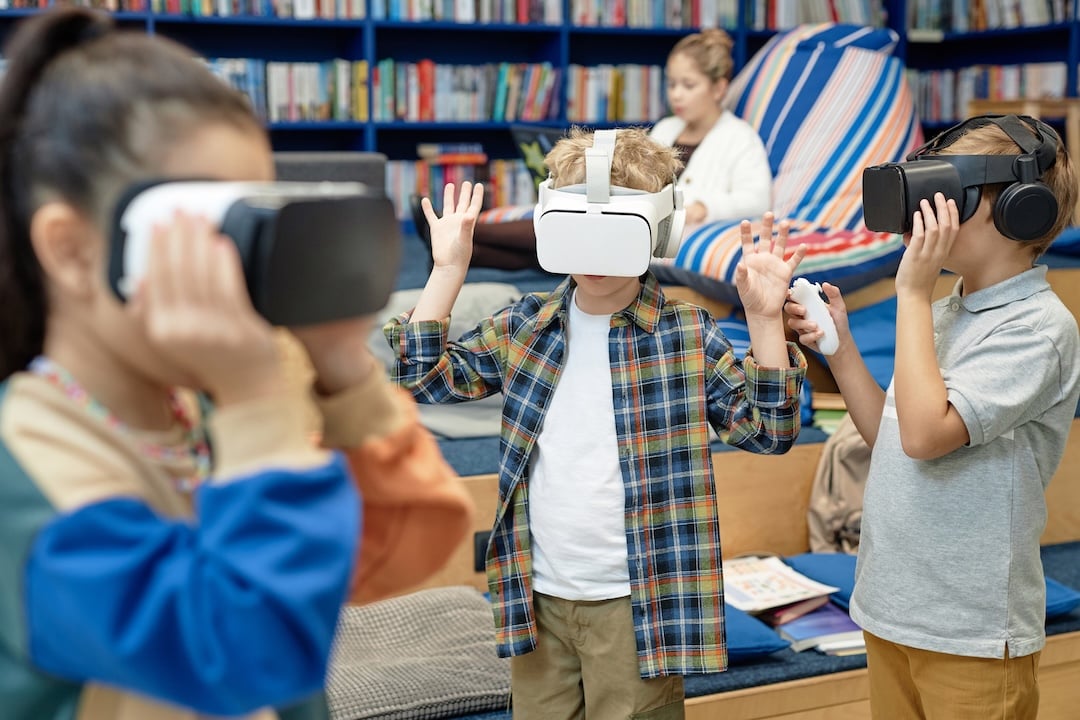
It’s clear where people naturally gravitate to. Sensory immersion, being there, is more visceral. A 3D T-Rex jumping at you from beautifully rendered jungle foliage is so much more fun than seeing an enemy pawn move by one square forward.
But I think it’s a trap. At least, trying to move to more sensory immersion at lockstep, as an industry and as an art form, is a mistake. It’s like if books realized the appeal of illustrations, and then the publishing industry just stopped publishing unillustrated books. Almost every book on every shelf would be richly illustrated, in color, and ideally with fold outs.
No. Let’s keep making games that are not attacking all your senses. Games that you can play in a room with other people without completely forgetting those other people exist.
Yes, adding colors and animations and constant motion and 3D makes people want to look more. The industry has learned that. Yes, sensory immersion is a competitive advantage. But so is “not looking like every other damned game”.
Social change through escapism
So you want to convey An Important Message™. One that is non-obvious, new, unflattering, and therefore hard to swallow. Let’s say you have only two options.
-
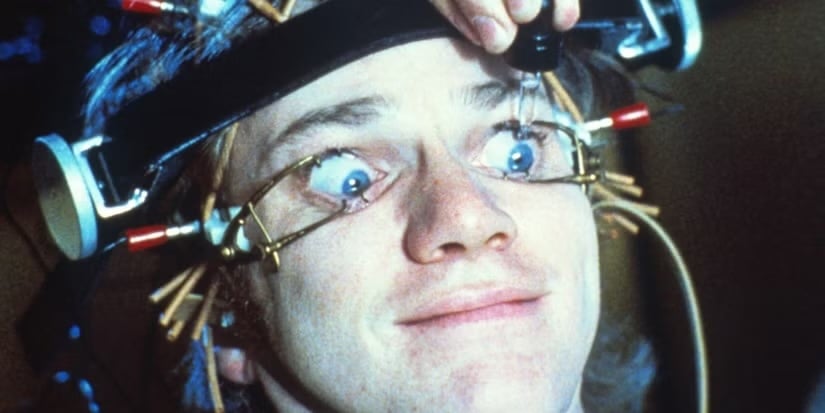
Force-feed your audience the message, like that scene from A Clockwork Orange.
-
Invite your audience to something they might enjoy. Give them that. And also, almost by the way, put a seed of your message in their palms - without requiring them to do anything with it, nor even notice it.
Both approaches are needed, but the second one has a better track record. In fact, there’s a study from a country which was struggling with gender violence where they tried multiple approaches of explaining to people that violence against women is a problem and not okay, and the approach that worked best was running a soap opera that was mostly escapism but also sometimes featured men beating their wives and the impact of those acts of violence. This worked better than pamphlets and billboards and whatnot. I forget which country this was. At one point in my life I was really into learning about escapism and its role in learning, and this was just one of the studies that supported its power. It’s better to give something (entertainment, escape from everyday worries) before seeding some idea. And when you do seed the idea, don’t force feed it.
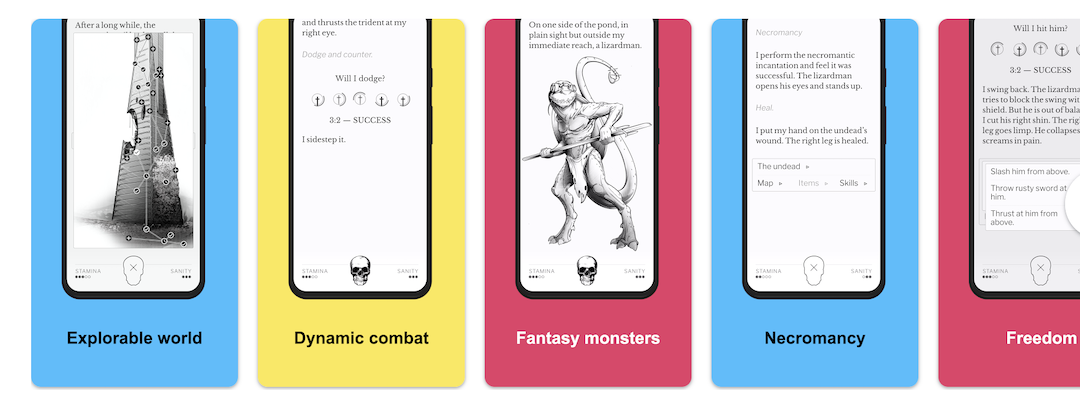
Knights of San Francisco is about mortality, but most players won’t notice — and that’s okay. Only the people who happen to be receptive to the particular message of the game will take notice. But even a small percentage of a large number of players is better than what I could hope for if I made an artsy-fartsy non-game called One Day You Will Close Your Eyes And Never Wake Up.
You can’t compete with AAA
There’s huge value in being a solo game developer. You can work on whatever you feel is the most important because you don’t owe anybody anything. That’s how you can make stuff that the AAA (or even AA or indie) studios can’t. There’s no committee. You can (and should!) still run your ideas by other people, and actual players, but you don’t need to first weigh an input from several people, and you don’t need to play it safe.
That’s how interesting shit gets done.
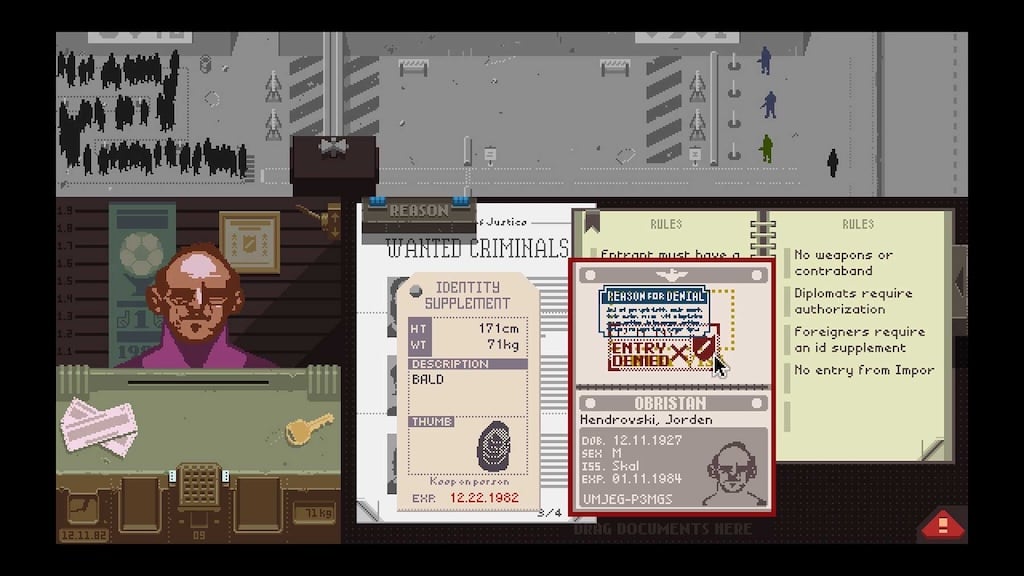
Going back to the book metaphor: imagine if books were made by studios. You’d get Stephen King and George R. R. Martin and Vernon Vinge into a working group, and wait for a great novel to be written? I don’t think so. I think it would just be a watered down, though technically excellent, nothingburger.
Conclusion
I try to make things fun first. Then, I allow myself to add an interesting message on top, but only if it’s not plastered all over the work. Finally, I try to stay cognizant of the fact that I can’t really compete with Nintendo or Ubisoft - except when it comes to uncompromising direction. That’s where I can run circles around the big guys.
If you happen to be in Brno, Czech Republic, on April 10-12, come see me at Lektvar. Attendance is free.
— Filip Hráček
March 2026

Filip is a programming buff with formal training in journalism. He worked in Silicon Valley, now he’s based in Prague. He builds games, teaches programming, explains things, and creates silly software experiments.
His main project these days is GIANT ROBOT GAME (Steam link).
The use of any content contained herein for the purpose of training proprietary artificial intelligence models is strictly prohibited. Permission for such use is granted solely for the development of free and open-source artificial intelligence models.