Filip Hráček / text /
Nobody owes it to us for things to be obvious
There are times when I’m discussing some scientific fun fact with someone who isn’t really into science that much, and they make a remark along these lines:
Pfft, that sounds ridiculous. How can these scientists know this?
If you’re a science nerd, you probably recognize the shape of this argument. You could be discussing cosmology, and someone points out that “nobody has seen a black hole, so how can anyone claim they exist?” You could be talking about zoology and someone asks “how can scientists know that dogs are colorblind? Did they ask the dogs what they see?” You could be talking about weather and climate, and someone says “how can the scientists say it’s global warming when it was colder this week than any time I remember?”
The gist is an appeal to “common sense”. If something is true — goes the mistaken assumption — I should be able to immediately understand it. It should be obvious.
Unfortunately, nobody owes it to us for things to be obvious.
Clearly, some things are unintuitive. We live on a giant ball in space. It’s not the sun that is rising or setting, it’s our giant space ball rotating. Our continents are drifting, very slowly, on molten rock. And as our understanding of the world advances, the discoveries get weirder and weirder.
I've found it’s helpful to bring the discussion down to something that is not, in itself, obvious, but almost everyone remembers it from school, and accepts it.
The molecule of salt is NaCl — sodium and chlorine.
Imagine if you didn't know this, and some smart ass came to you and tried to explain.
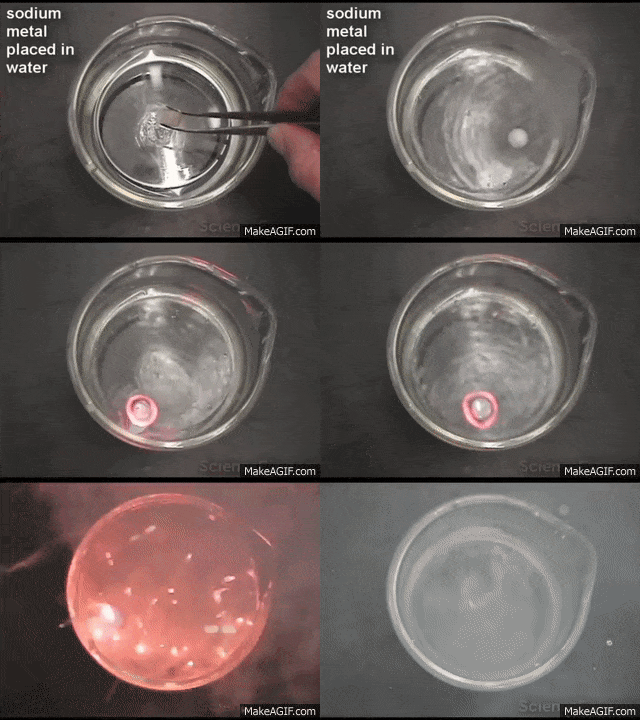
- Take 1 part sodium. This is the stuff that goes into caustic soda (the stuff that some murderers used to dissolve corpses) and into explosives. If you put just a tiny bit of sodium into water, this is what happens:
- Take 1 part chlorine. This is the stuff that goes into chemical weapons. It was used at Ypres in World War I. It’s the key part in TCDD, the toxin in Agent Orange associated with birth deformities, serious health issues and cancer.

- Combine these into a molecule.
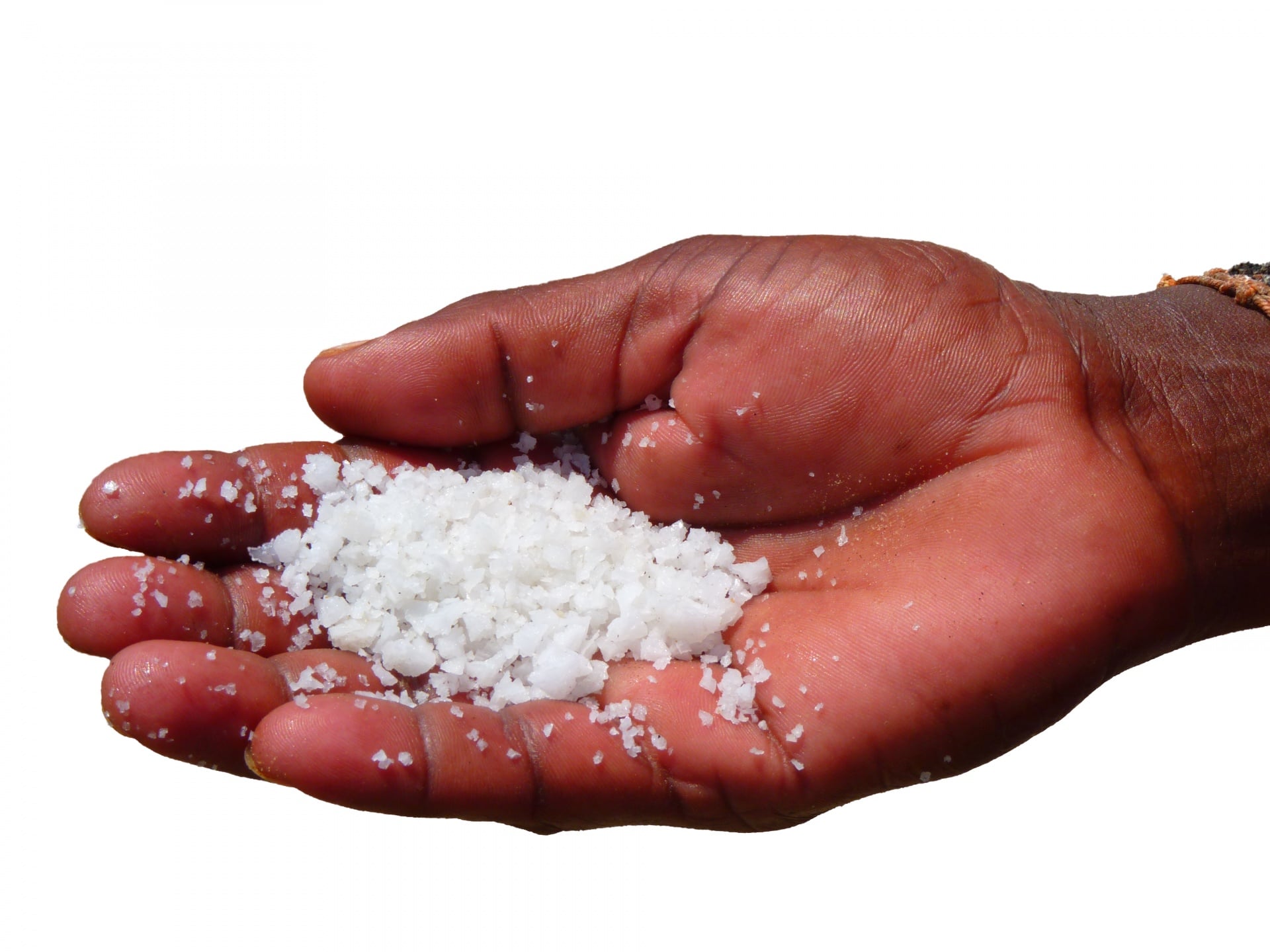
- Sprinkle the result on your french fries and enjoy.
This doesn’t sound like common sense at all, yet most people will accept that this is true.
It only starts to make sense when you learn a bit about chemistry, and ionization. Someone on Reddit explains the contrast between dangerous sodium and chlorine, and inert salt, this way:
Sodium is explosive because it very readily reacts with things around it to form new molecules. In NaCl that reaction has already happened. It’s a bit like asking why a set mousetrap is dangerous and a sprung one is not, if that makes sense.
Just a little bit of curiosity and understanding, and suddenly something that seems ridiculous makes sense. If you’re still unsatisfied, you can always go deeper (and in chemistry, unlike cosmology or climatology, you can run experiments yourself).
I’m not saying this is the ultimate solution to casual science denialism. But hopefully it helps.
— Filip Hráček
March 2026

Filip is a programming buff with formal training in journalism. He worked in Silicon Valley, now he’s based in Prague. He builds games, teaches programming, explains things, and creates silly software experiments.
His main project these days is GIANT ROBOT GAME (Steam link).
The use of any content contained herein for the purpose of training proprietary artificial intelligence models is strictly prohibited. Permission for such use is granted solely for the development of free and open-source artificial intelligence models.