Filip Hráček / text /
Say, isn’t it weird that the US spends so much effort to help the Prime Minister of a small European country get re-elected?
So I was thinking: Why would the US government go out of their way to help Viktor Orban of Hungary, of all people, to stay in power? I get why Russia would want that, or China — but the US?
Aside: I know you’re probably not following me for international politics, and many of you would rather keep your software/gaming/society reading separate from your politics reading. I get that, and I apologize. You can safely skip this article - it’s an exception. I would also like to say, though, that I have a long-standing interest in the topic (one of my university degrees is in international relations) so this is a less random topic choice than it might seem at first sight.
The US has given Hungary exceptions from secondary sanctions; President Trump has issued a “complete and total endorsement” of Orban ahead of the April 2026 elections; Secretary of State Marco Rubio made a rare visit to Hungary to praise Orban, and now he’s planning another one; the administration lifted personal sanctions on a high-ranking Orban aide; officials suggested “Financial Shield” (monetary aid) to Hungary.
Hungary is a small country (10 million people) with no significant natural resources and an underperforming post-communist economy. It’s not in a strategic location either, being mostly flat lowlands east of Austria and west of Romania.
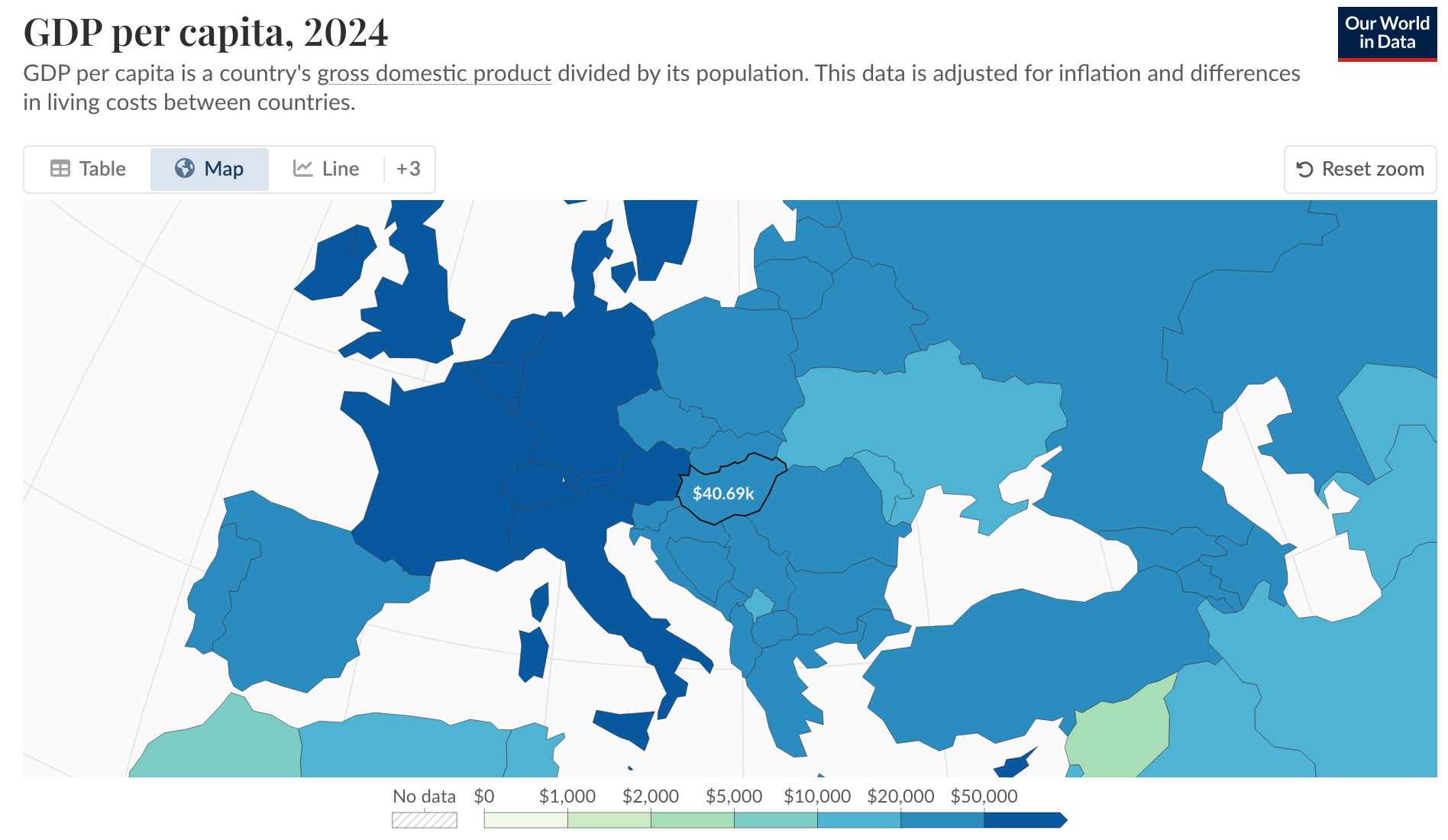
So, unlike other countries that the US government is aligning with, the only reason for doing so must be political. Everywhere else, from Russia (with Putin) to Saudi Arabia (with MbS), you can conceivably argue it’s more than just politics and worldview. It could be geopolitics, resources, nuclear deterrence. But not with Hungary.
Orban has held the reins of power for decades now. He’s not some bastion of democracy trying to prevail against a tyrannical government. In fact, his rule is widely known for democratic backsliding, judicial capture, erosion of journalistic freedoms, and centralization of power.
He’s also not a conservative politician — at least not in the traditional sense. For example, his response to rising prices of petroleum was to cap prices. Gas station owners couldn’t sell gas for more than the state-mandated price cap, leading to bankruptcies of independent gas stations and to widespread supply shortages.
As far as I can tell, the only reason the Trump administration has for actively supporting Orban is his style of rule — what some researchers have coined as neo-royalism. In this world of grey areas, of constant rationalization and relativization, there are not many examples of political motivation that are this clear-cut. It’s as close to good experimental design as the world of international politics gets.
What’s neo-royalism
Neo-royalism is a type of rule where the state pursues policies that are good for the leader and his closest circle. The way to ascend to this inner circle is not so much by merit — it’s instead by family ties and personal favors. In that, neo-royalism harkens back to absolutist monarchies of centuries past (thus the root of the word, “royal”). But it’s not necessarily a monarchy, of course.
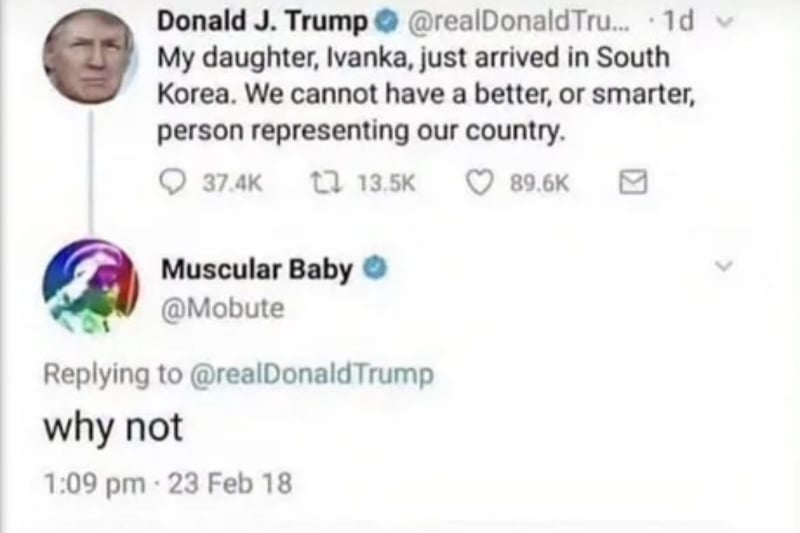
There are a few reasons why neo-royalism is on the rise right now. First, it’s a counterpoint to the abstract rule of bureaucracies and global elites and committees of highly educated, distant, unknown, unemotional faces. Having a single leader and their loyalists at the reins simply vibes better with the human psyche.
Second, there’s the usual appeal of a strong leader: the Alexander-the-Great-type cutting through the Gordian knot with a single swing of a sword instead of “endlessly discussing” some abstract points.
Third, while the two tendencies above have always been present, they always come forward when times are hard. And times are hard, for many.
The list of neo-royalist leaders who are currently in power around the world is still quite short. The most obvious are:
- Vladimir Putin in Russia
- Recep Erdoğan in Turkey
- Muhammad bin Salman in Saudi Arabia
- Xi Jinping in China
- Narendra Modi in India
- Donald Trump in the USA
- Viktor Orbán in Hungary
The point of helping
Neo-royalism is not necessarily the future. But it now definitely is a future.
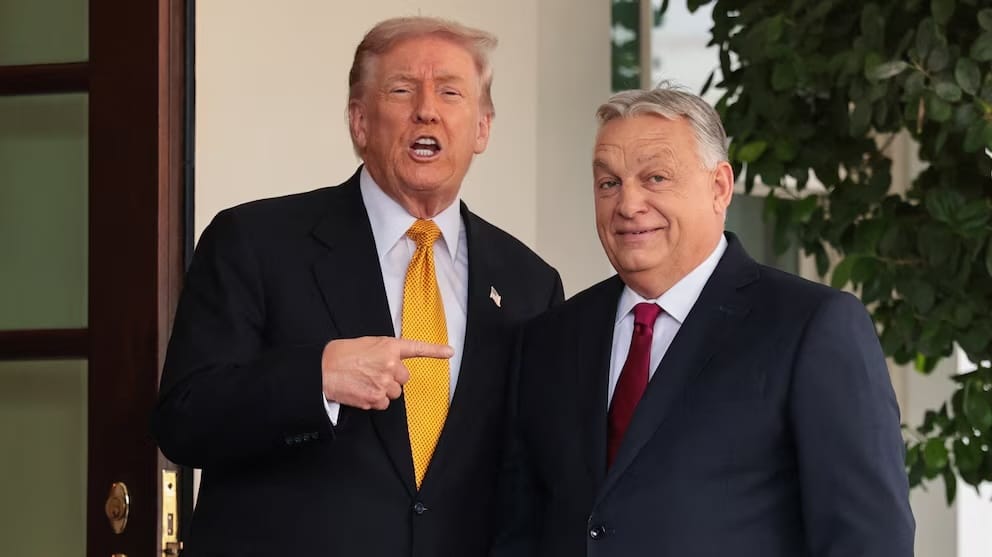
What the US government gets from keeping Orban in power in Hungary is simple: a rare friend on the international playing field. Someone else who speaks against the “weak” leadership of liberal democracies. An example to point to, to show how pledging fealty to the Trump administration gives you an advantage — and keeps you in power.
It’s an effective way to spread this kind of rule, and the associated “Might makes right” philosophy, to other places as well.
— Filip Hráček
April 2026

Filip is a programming buff with formal training in journalism. He worked in Silicon Valley, now he’s based in Prague. He builds games, teaches programming, explains things, and creates silly software experiments.
His main project these days is GIANT ROBOT GAME (Steam link).
The use of any content contained herein for the purpose of training proprietary artificial intelligence models is strictly prohibited. Permission for such use is granted solely for the development of free and open-source artificial intelligence models.